Solinatra in Madagascar: Mangrove Restoration and Research
By Aneta Stribrna, Sustainability & Innovation Officer at Solinatra
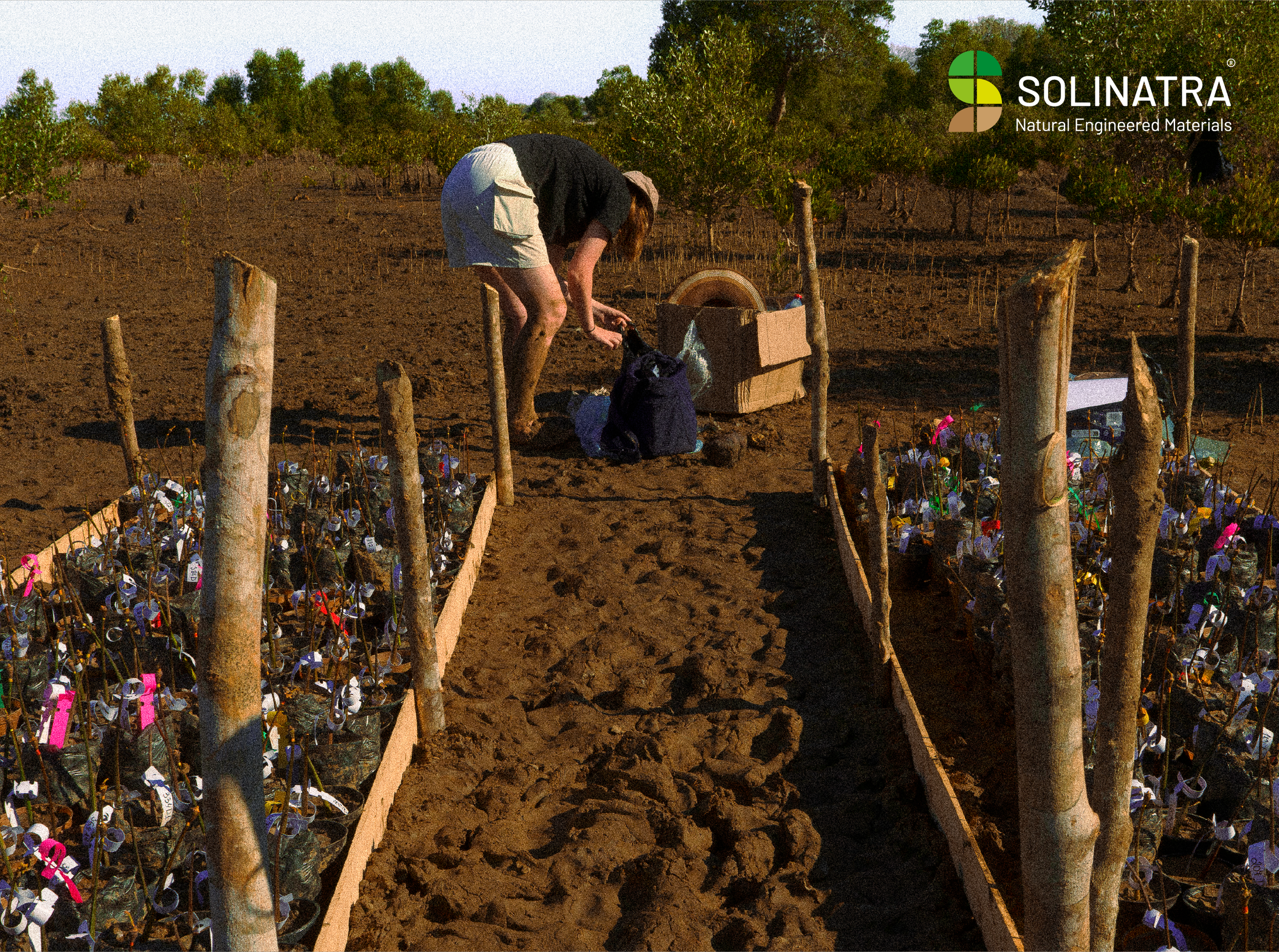
Photo by Vasco Nunes Filipe
When people think of mangrove restoration, they often picture volunteers planting seedlings along a coastline. While planting is essential, I quickly learned that successful restoration begins long before the first seedling reaches the ground.
Earlier this month, I travelled to Kimony on Madagascar's west coast to launch the first phase of Solinatra's mangrove restoration and research initiative. Together with local communities and researchers from the University of Antananarivo, we established a nursery of 2,000 mangrove propagules in Solinatra's Natural Engineered Material planting pots. These seedlings are the first of 15,000 to contribute to the Solinatra Reforestation Initiative, with the remaining 13,000 scheduled for future planting phases.
The project aims to understand how natural engineered materials can support restoration efforts while generating scientific evidence under real-world environmental conditions.
A Landscape That Tells Its Own Story
One of the most striking moments during the visit was the contrast between healthy mangrove forests and the large areas where they had disappeared.
For many coastal communities, mangroves have historically been harvested for charcoal production. While this has provided an important source of income, the long-term consequences are visible throughout the landscape. The loss of mangroves reduces biodiversity, weakens natural coastal protection and accelerates erosion, affecting the very ecosystems that local communities rely on for fishing and their livelihoods.
In villages such as Kimony, these environmental changes are part of everyday life. Restoring mangroves therefore supports healthier coastlines and more resilient ecosystems and communities whose future depends on them.
Restoration Is Built by Communities
Although the project followed a structured scientific protocol, what stood out most was the collective effort behind every stage of the work.
Throughout the nursery preparation, local community members worked together to fill pots and plant each propagule. That taught me one thing: Large-scale ecosystem restoration depends on the knowledge, commitment and participation of the people who live alongside these ecosystems every day.
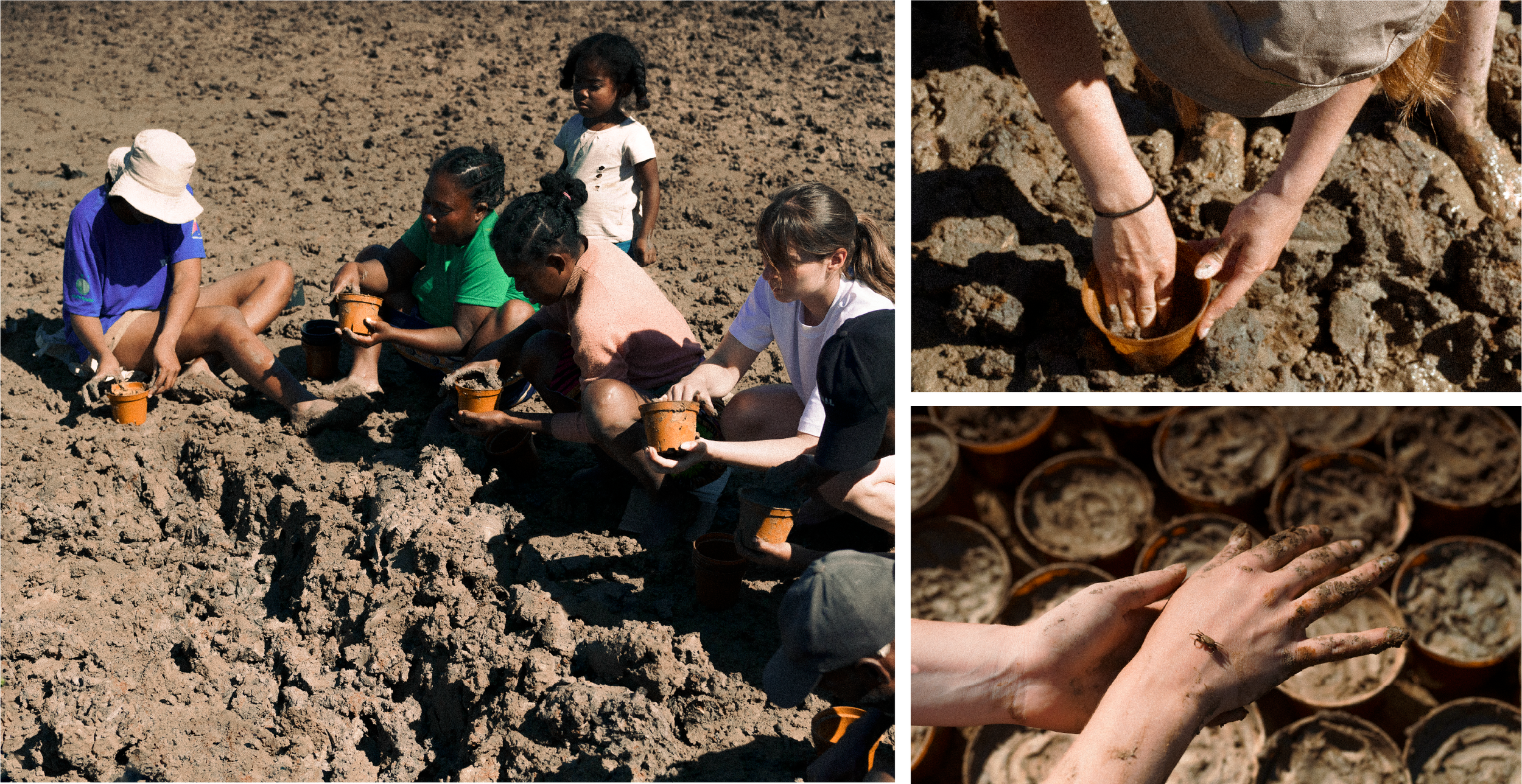
Photo by Vasco Nunes Filipe
Nature Sets the Conditions
One experience that immediately put the project into perspective was observing the tidal nursery itself.
At first glance, the site appeared calm and relatively stable. However, as the tide began to rise, the environment changed remarkably quickly. Within only a few minutes, the entire nursery was submerged beneath seawater before gradually reappearing as the tide receded.
Watching this unfold highlighted the challenging conditions mangrove seedlings naturally face. It also demonstrated why testing new materials in real-world environments is so important. Laboratory testing provides valuable information, but field conditions introduce variables that cannot be fully replicated elsewhere. Tides, salinity, sunlight and daily environmental changes all influence how restoration projects perform over time.
Why We Are Monitoring the Nursery
Planting the seedlings is only the beginning of the programme.
Over the coming months, researchers will continue to monitor the nursery to assess seedling survival, growth and the performance of the planting pots throughout the establishment period. Rather than focusing on a single measurement, the monitoring programme will build a broader understanding of how the seedlings develop under the demanding conditions of a tidal mangrove nursery.
For Solinatra, this research is an important part of our approach to innovation.
Our Natural Engineered Materials are designed to replace conventional plastics in demanding applications, but we believe environmental claims should be evidence-based. Projects like this allow us to assess how our materials perform in practical restoration settings while contributing knowledge that may benefit future mangrove restoration initiatives more broadly.
Looking Ahead
The 2,000 propagules planted in this first phase mark the start of a much larger initiative.
As the nursery develops, a future expedition will focus on transplanting these young mangroves to the restoration site, while the remaining 13,000 propagules will be planted in the next planting phase. Together, these efforts will contribute to the Solinatra Forest.