

Solinatra’s Natural Engineered Materials
Materials Defined by Ingredients, Purpose and End-of-life
Natural Engineered Materials are Solinatra’s approach to developing materials that meet three connected requirements: bio-based and naturally sourced ingredients, suitability for the intended application, and a responsible end-of-life route.
Each material grade is developed according to an ingredient-agnostic principle. The formulation meets the needs of the application without being constrained by a single feedstock or ingredient.
What Natural Engineered Materials Means
The term natural refers to the sourcing and composition of the ingredients used in the formulation. Natural Engineered Materials are developed using bio-based and naturally sourced ingredients, selected according to the requirements of the relevant material grade and application.
The term engineered refers to how ingredients are formulated into materials that are fit for purpose. Each grade is developed around the required product performance, relevant regulatory requirements, and existing production equipment.
Natural and engineered are not opposing ideas. For Solinatra, engineering enables different natural and bio-based inputs to be combined into materials suited to their intended application.
Bio-based and Naturally Sourced Ingredients
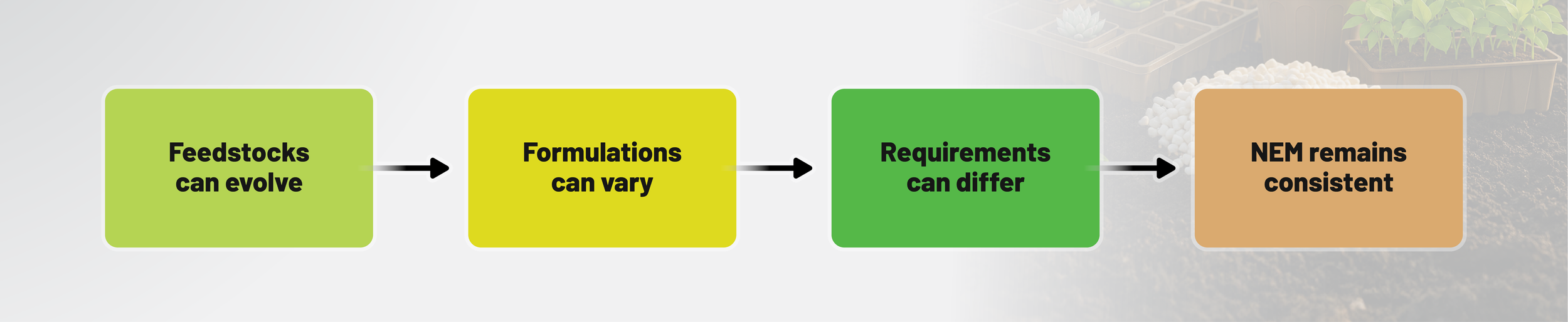
formulation is not tied to a single feedstock or ingredient. Bio-based and naturally sourced ingredients can be selected and combined to meet the requirements of the relevant grade and application.
Depending on these requirements, a formulation may include bio-based polymers such as PLA, PHA or PHBV, alongside other naturally sourced ingredients. The ingredients used can vary according to the formulation, processing and performance requirements of the material, while Natural Engineered Materials remain PFAS-free.
The use of bio-based polymers does not, by itself, determine how a material is classified under regulation. Under European legislation, certain polymers can bring a material or product within plastic-related regulatory definitions, even when those polymers originate from biological sources. For this reason, Solinatra does not use the term plastic-free as a blanket description of Natural Engineered Materials.
Fit for Purpose
Fit for purpose means balancing three factors: product performance, compatibility with existing production equipment, and compliance with the regulatory requirements for the intended application and market.
Solinatra materials are designed for established manufacturing technologies, including injection moulding, thermoforming and extrusion.
Regulatory requirements can vary by application and region. For example, a food-contact material must comply with the relevant food-contact requirements in the market where the final product will be sold. Horticultural products may have different functional and end-of-life considerations depending on how and where they are used.
Responsible End-of-life
Responsible end-of-life is considered from the outset of material development, with the intended route defined by the material, application and available infrastructure.
Where reintegration into natural systems is the intended route, the material may be designed for composting or biodegradation under validated conditions to avoid persistent microplastics after use.
Recycling may also be considered where a validated pathway and an appropriate facility are available.
Claims are made only for the relevant material grade, application and conditions, and are supported by evidence.
Five Questions That Shape the Right Application
Every application has a different set of priorities. These five questions help define the right Natural Engineered Materials:

What does the product need to do?
We define the physical performance the application actually needs, including strength, flexibility, resistance and other functional requirements.
How will you manufacture it?
The production route helps shape the formulation. We consider the machinery, tooling, processing conditions and finishing steps the material needs to work with, including any processes or additives that should be avoided.
What should happen after use?
The intended end-of-life route is defined from the outset, based on the application, market and available infrastructure. This helps determine the relevant formulation and validation requirements.
How long does the product need to last?
Shelf life and functional life are considered separately. Storage conditions, climate, exposure and expected performance during use all help define the material requirements.
Why are you moving to a bio-based material?
The motivation matters. Regulatory requirements, customer expectations, brand commitments and product goals can all influence what the final material needs to achieve.
Already know your five answers? Let’s turn them into the right material. Contact one of our materials experts at sales@solinatra.com.